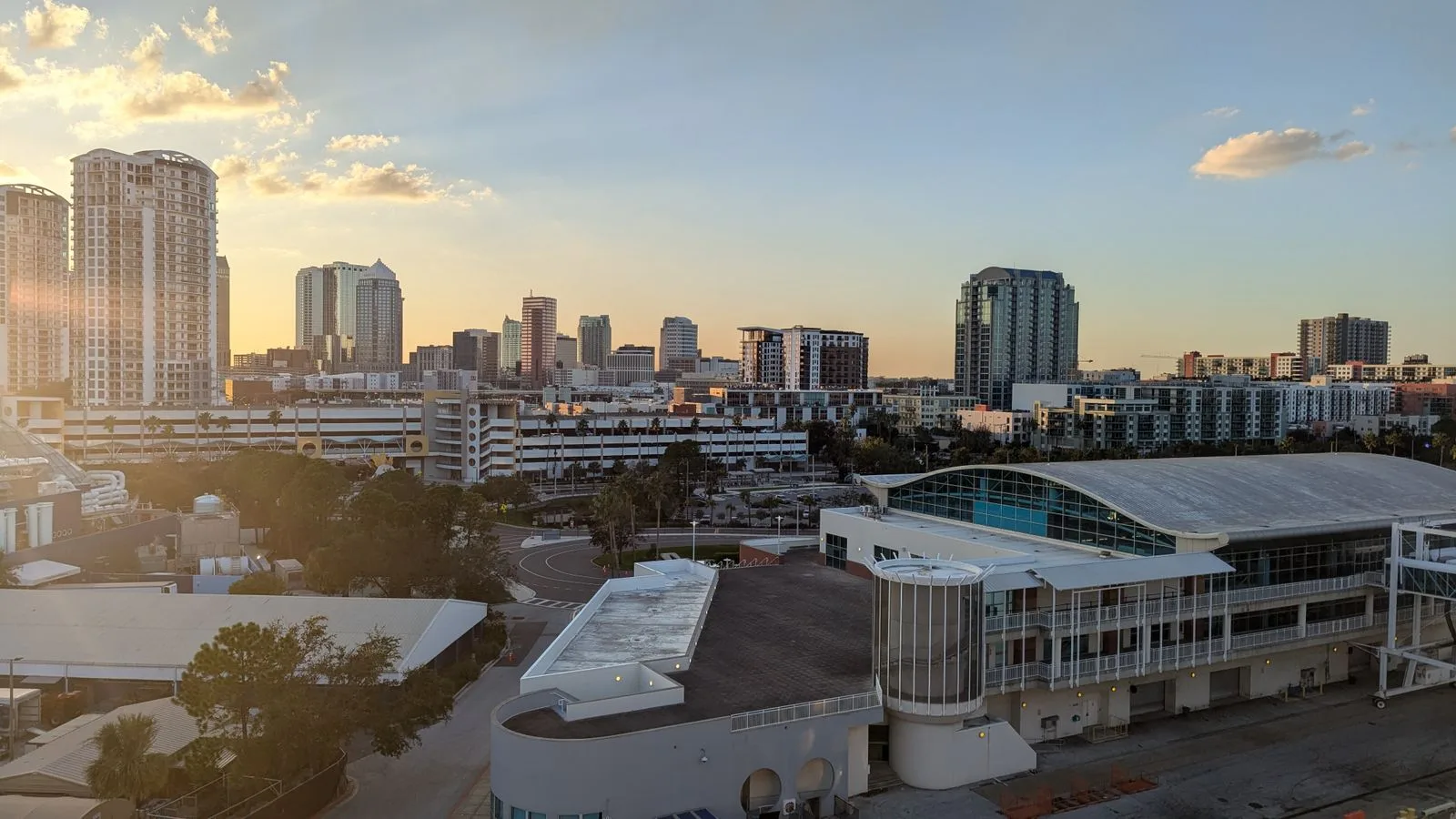
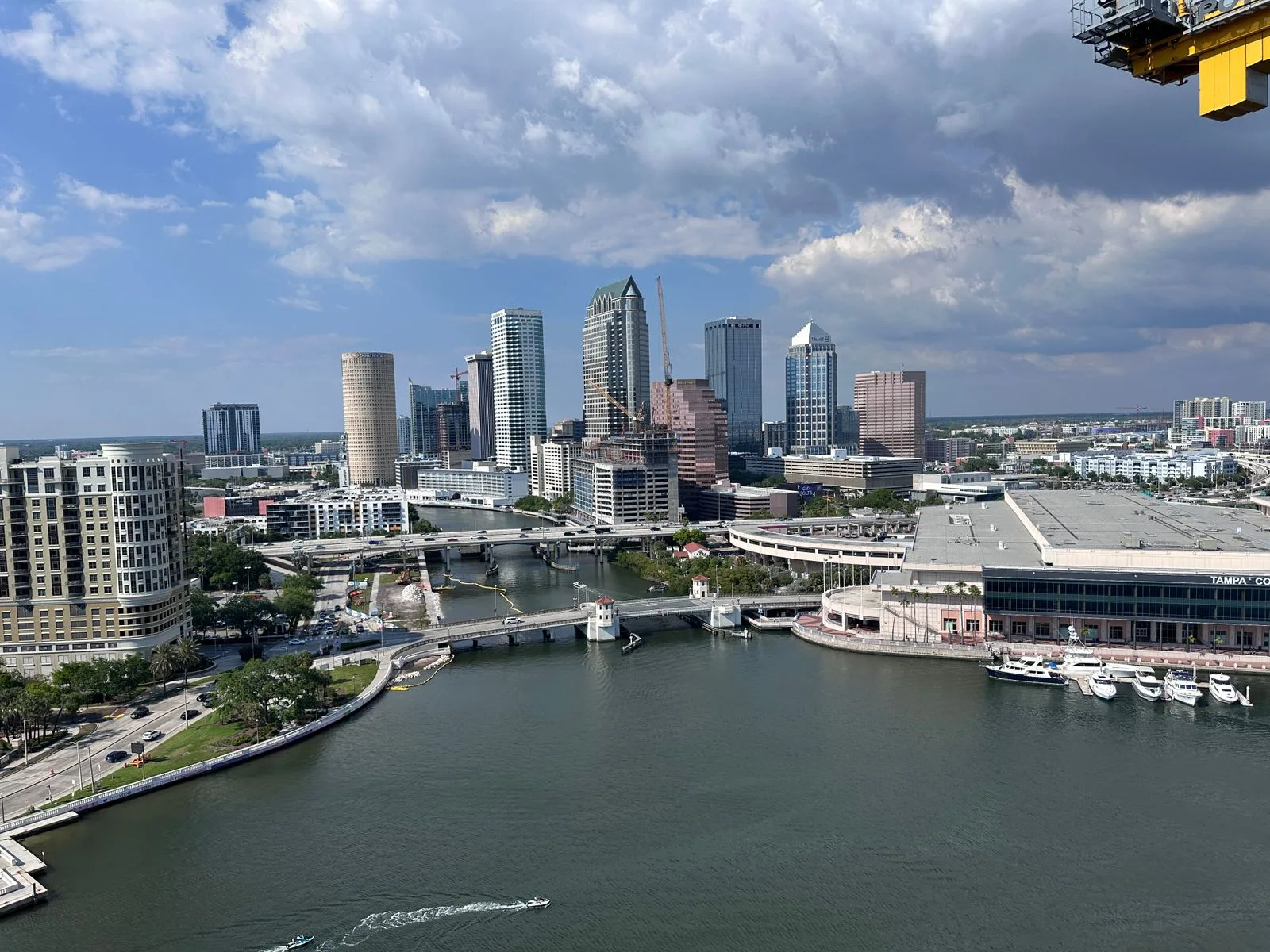
Ask for the Tampa population and you will get a handful of different numbers, and most of them are accurate. They just describe different boundaries. After spending time in the city, I went to the Census Bureau instead of repeating a number I had heard. Here is what the official figures say, which one answers your question, and where people mix them up.
Quick answer: how many people live in Tampa?
The U.S. Census Bureau's July 1, 2025 estimate for Tampa city, Florida is 413,554. That is the municipality only. The wider Tampa–St. Petersburg–Clearwater metropolitan area had an estimated 3,418,895 residents on the same date. Both figures are real; they answer different questions.
If you are filling out a form, writing a report, or settling a trivia argument, ask which boundary you mean:
- The city of Tampa: 413,554 (July 1, 2025 estimate)
- The Tampa–St. Petersburg–Clearwater metro: 3,418,895 (July 1, 2025 estimate)
I would not round either one. Saying "about 400,000" for the city is not a figure the Census Bureau gives, and "3.4 million" hides which boundary you were talking about.
Last updated: November 2, 2026
The city number: Tampa population 2025
The 413,554 figure comes from the Census Bureau's QuickFacts page for Tampa city, Florida, marked V2025. It is labeled as the city, not the county and not the metro. The Census Bureau's city and town population file for Florida lists the same Tampa estimate, so the two sources agree.
A note on the "V2025" label: it means the final year of the 2020–2025 estimates series. The Census Bureau says estimates from different vintage years are not comparable, so I would not set this figure next to an older estimate you remember from a different release.
Growth since 2020 and 2010
The Census Bureau gives several reference points, and they are not interchangeable:
| Measure | Tampa city | |---|---| | Census count, April 1, 2010 | 335,709 | | Census count, April 1, 2020 | 384,959 | | Estimates base, April 1, 2020 (V2025 series) | 385,336 | | Estimate, July 1, 2025 | 413,554 |
The bureau reports a 7.3 percent change from the April 1, 2020 estimates base to July 1, 2025. The estimates base (385,336) and the 2020 census count (384,959) are two different things, and both appear on QuickFacts, so I have kept them separate here rather than folding one into the other.
Land area and density
Tampa city covers 114.02 square miles of land (2020). The Census Bureau's 2020 population density is 3,376.4 people per square mile. For comparison, the 2010 figures were 113.41 square miles and 2,960.2 people per square mile.
Those density numbers belong to the census years. Dividing the 2025 estimate by the 2020 land area would produce a number, but it would not be a Census Bureau density figure, so I am not offering one.
Who lives in Tampa
QuickFacts also breaks the city down by age, origin, and household. Some of these come from the American Community Survey's 2020–2024 five-year window rather than the July 1, 2025 headcount, so treat them as survey-based profiles.
Age and sex
- Under 18: 19.4%
- 65 and over: 13.7%
- Female: 49.8%
Race and origin
- White alone: 49.0%
- Black or African American alone: 20.4%
- Asian alone: 4.9%
- Two or more races: 19.9%
- White alone, not Hispanic or Latino: 44.3%
- Hispanic or Latino (any race): 26.2%
- Foreign-born persons, 2020–2024: 19.4%
- Language other than English spoken at home, age 5+: 28.3%
Education and health
- High school graduate or higher, age 25+: 90.2%
- Bachelor's degree or higher, age 25+: 45.7%
- Disability, under 65: 8.1%
- Without health insurance, under 65: 12.1%
Work
- Civilian labor force, age 16+: 66.1%
- Female civilian labor force: 62.3%
- Mean travel time to work: 24.8 minutes
Households, income and housing (2020–2024)
- Households: 166,278, at 2.31 persons per household
- Median household income (2024 dollars): $75,475
- Per capita income (2024 dollars): $52,528
- Persons in poverty: 15.5%
- Median gross rent: $1,701
- Median value of owner-occupied housing units: $420,400
- Owner-occupied housing unit rate: 50.3%
- Median selected monthly owner costs: $2,179 with a mortgage, $640 without
One thing QuickFacts leaves blank: housing units for July 1, 2025 are flagged "not applicable" (X) for the city, so there is no current housing-unit count to quote.
If you are weighing a move and want to see how these numbers translate into neighborhoods, our Tampa Florida overview is the place to start, and the Tampa map guide shows how the city sits within the surrounding area.
The metro is a different boundary
The 3,418,895 figure is for the Tampa–St. Petersburg–Clearwater, FL Metropolitan Statistical Area. The Census Bureau's Population Division released these metro estimates in March 2026, and the 2020–2025 totals are published on the Census Bureau's metro and micro area estimates page. The metro covers Hernando, Hillsborough, Pasco, and Pinellas counties, not just the city's 114.02 square miles.
Metro growth, year by year
The metro's July 1 estimates in the same vintage:
| Year | Metro population | |---|---| | April 1, 2020 estimates base | 3,175,282 | | 2020 | 3,187,831 | | 2021 | 3,230,962 | | 2022 | 3,307,164 | | 2023 | 3,370,351 | | 2024 | 3,405,357 | | 2025 | 3,418,895 |
From July 1, 2024 to July 1, 2025 the metro added 13,538 people. That is noticeably slower than the gains in the early part of the series.
For the metro, the bureau's components of change for July 1, 2024 through June 30, 2025 break down this way: 31,956 births, 34,862 deaths (natural change of minus 2,906), net international migration of 18,413, net domestic migration of minus 1,539, and a residual of minus 430. In other words, migration from abroad did the heavy lifting for the metro that year, not a surplus of births. These components are for the metro only. I do not have them for the city, and they should not be applied to the 413,554 figure.
The St. Louis Fed's FRED series for the metro reports the same 2025 figure, shown in thousands of persons. Don't read that as a second, competing population: it is the same estimate presented in a different unit.
The divisions inside the metro
The Census Bureau follows metropolitan division delineations issued in July 2023. Two divisions make up this metro:
Tampa, FL metropolitan division (July 1, 2025): 2,470,332
- Hernando County: 221,701
- Hillsborough County: 1,574,115
- Pasco County: 674,516
Hillsborough County alone (1,574,115) is far above the city's 413,554, which is a good reminder that the county and the city are not the same place. The Census Bureau does not publish a figure for "the rest of the county," so I would not subtract one number from the other to invent it.
St. Petersburg–Clearwater–Largo, FL division (Pinellas County)
- July 1, 2025: 948,563
- July 1, 2024: 960,397
- April 1, 2020 base: 959,090
Pinellas County's 2025 estimate is lower than its 2024 estimate. The Census data I worked from does not say why, so I am not going to guess at a cause.
Tampa, St. Petersburg and Clearwater side by side
The metro's name lists three cities, and people sometimes assume the metro population is just those three added up. The Census Bureau's side-by-side QuickFacts for the three cities (July 1, 2025 estimates) shows how far off that would be:
| | Tampa | St. Petersburg | Clearwater | |---|---|---|---| | July 1, 2025 estimate | 413,554 | 264,033 | 114,364 | | April 1, 2020 estimates base | 385,336 | 258,358 | 117,343 | | Change since 2020 base | +7.3% | +2.2% | −2.5% | | April 1, 2020 census count | 384,959 | 258,308 | 117,292 | | April 1, 2010 census count | 335,709 | 244,769 | 107,685 | | Land area (2020, sq mi) | 114.02 | 61.82 | 26.08 | | People per sq mi (2020) | 3,376.4 | 4,178.7 | 4,496.9 | | Age 65 and over | 13.7% | 21.1% | 24.1% | | Median household income (2024 dollars) | $75,475 | $75,192 | $66,381 |
Adding the three 2025 city estimates gives 791,951. That is my own arithmetic, not a census geography, and it is nowhere near the metro's 3,418,895. Most of the metro lives outside those three city limits.
Clearwater is worth a careful read. Its 2025 estimate is below its 2020 base, even though its 2010 census count was lower than its 2020 count. Those are different comparisons, and I would not blur them into a simple growth story. If you are comparing the two sides of the bay for a visit or a move, our guide to getting from Tampa to St. Petersburg covers the practical side.
Why different sources give different Tampa numbers
A few things explain the confusion:
1. Boundary. City, county, metropolitan division, and metro are four different geographies. Tampa the city is 413,554; Hillsborough County is 1,574,115; the metro is 3,418,895. 2. Estimate versus count. The April 1, 2020 census count (384,959) and the 2020 estimates base (385,336) are both official, and both differ from a July 1, 2025 estimate. 3. Vintage. The Census Bureau warns that different vintage years of estimates are not comparable. 4. Survey versus headcount. Income, rent, and demographic shares come from the 2020–2024 American Community Survey window, which is a sample, not a July 1, 2025 headcount. 5. Units. QuickFacts reports 2022 total retail sales of 11,377,387 in thousands of dollars, which is not eleven million dollars. Retail sales per capita ($28,563) is a separate figure in different units.
Tampa-area questions often travel in packs. If you landed here looking for a code or a place rather than a headcount, our Tampa ZIP code guide covers that side of things.
FAQ
What is the population of Tampa, Florida? The Census Bureau's July 1, 2025 estimate for Tampa city is 413,554. The Tampa–St. Petersburg–Clearwater metro area is estimated at 3,418,895 for the same date.
How much has Tampa grown since 2020? The Census Bureau reports a 7.3 percent change from the April 1, 2020 estimates base of 385,336 to the July 1, 2025 estimate of 413,554. The 2020 census count itself was 384,959.
Is Tampa bigger than St. Petersburg? Yes. Tampa city's July 1, 2025 estimate is 413,554, compared with 264,033 for St. Petersburg city and 114,364 for Clearwater city.
Does the Tampa population include St. Petersburg and Clearwater? Not the city figure. The metro figure of 3,418,895 does cover the wider area, including Pinellas County, where St. Petersburg and Clearwater sit.
Where can I check the latest figures myself? The Census Bureau's QuickFacts page for Tampa city is the source for the city numbers in this guide, and the bureau's Florida city and town totals file lists the same estimate.
The short version
If someone asks for the Tampa population, the answer depends on the boundary: 413,554 for the city, 3,418,895 for the metro, both as of July 1, 2025. Name the date, name the geography, and call them estimates. That keeps you consistent with the Census Bureau and clear of the most common mix-up.
Mailing and phone layers sit beside the headcount — see Tampa area code when the search is dialing, not ZIP.